
New Jersey’s New E-Bike Law: Why Riders Must Verify Local Regulations
Electric bike laws in the United States are not universal—and New Jersey’s newest legislation proves just how important it is for riders to verify state and local regulations before riding.
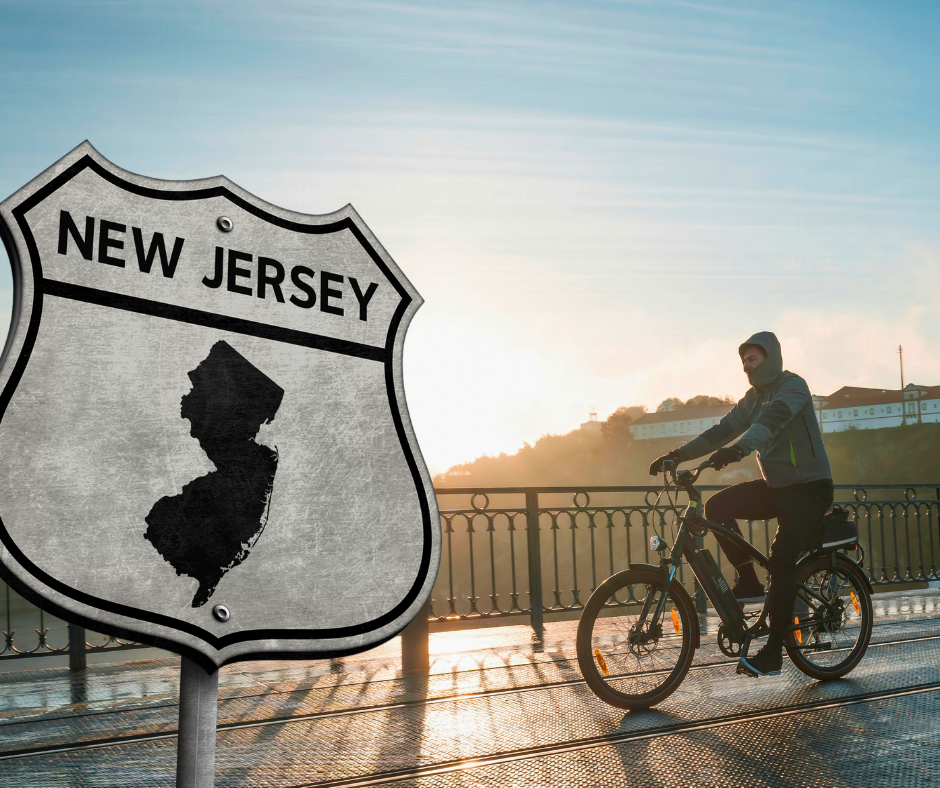
In January of 2026, New Jersey enacted the most restrictive eBike law in the country, dramatically changing how electric bicycles are classified and regulated. These changes impact residents, visitors, retailers, and anyone traveling with an eBike into the state.
How the New Jersey E-Bike Law Changes Classification
Under the new law, New Jersey no longer recognizes the widely adopted three-class eBike system used in 46 states.
Only Class 1 eBikes qualify as “low-speed electric bicycles”
Class 2 and Class 3 eBikes are classified as motorized bicycles
All eBikes require registration and a valid driver’s license
Class 2 and Class 3 eBikes also require insurance
One notable provision of the law addresses high-speed electric motos that have contributed to serious roadway incidents.
Focus Shifts to High-Speed Electric Motos
New Jersey authorities are expected to enforce a ban on the online advertising and sale of certain vehicles defined as:
Two-wheeled
Equipped with operable pedals
Motor output exceeding 750 watts
Capable of speeds over 28 mph
These vehicles are often marketed as eBikes despite being designed for high-speed operation and are distinct from traditional pedal-assist electric bicycles.
This source is credited to People for Bikes, we encourage you to visit their website.
Bicycle Motor Works’ Commitment to Informed Riding
At Bicycle Motor Works, we support responsible e-bike ownership, rider education, and clear regulatory standards. Electric bicycles play a critical role in transportation, recreation, and sustainability—and informed riders help protect long-term access for everyone.
The most important takeaway for riders nationwide is simple:
Always verify your state and local e-bike laws before riding—especially when crossing state lines.
Regulations can vary significantly based on:
E-bike class and motor output
State-specific definitions
Licensing, registration, and insurance requirements


Comments